
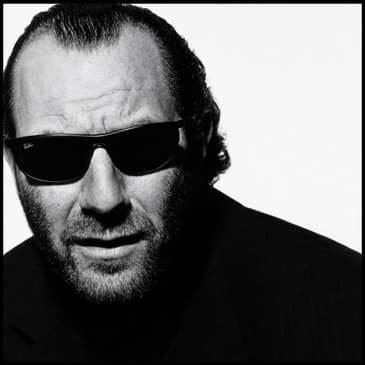
[00:00:00] Hi, I'm Chrissy Mack from Radio Northern Beaches and you've just tuned in to the Listen and Chat with Chrissy Mack podcast. This is the space where we pull no punches, sometimes a little controversial, sometimes downright outrageous and sometimes just packed full of information that is interesting to know. Well coming up right now we've got a real treat for you, an icon of Australian comedy who needs very little introduction.
[00:00:25] Austen Tayshus burst onto the scene in 1983 with Australiana, which became the highest selling Australian single of all time. For over four decades he's been pushing boundaries, telling it like it is and keeping audiences laughing right across the country with his sharp wit and unforgettable stage presence. Now a quick heads up for everyone listening at home or in the car. Austin is famous for his raw unfiltered style.
[00:00:55] So consider this a mild language and adult concept warning for the next segment. Let's welcome to the program the one and only, Austen Tayshus. Well hello Austen Tayshus, welcome to Radio Northern Beaches and thanks for agreeing to talk to us. It's my absolute pleasure Christine, thank you so much for having me on. Well I'd like to start with just a bit about you and also how your past led to a comedian.
[00:01:21] So I was born in the United States, I was born in New York, my parents were living in New York, they met in New York, I think it was a blind date. And they married in 1954 in New York City and within six months they were on their way to Australia. So my dad who was a European Polish background Holocaust survivor was his first encounter with Australia. It was 19, probably December 1954 and I was about six months old then.
[00:01:50] And we moved into Castle Crag in Sydney and we lived there for a while and then moved to the eastern suburbs and I was brought up in Vaucluse. And I did the normal stuff for most of my life, most of my early life, you know school, blah blah blah, and then high school. And then I got to Sydney Uni and I decided to do dentistry because my dad was always going on about how people survived the Holocaust when they had a profession, you know.
[00:02:20] So if there was a dentist in concentration camp, that guy survived because he was helping Sir Tremans, Vizetis or something like that. Well that's a noble profession. Well, yeah, well to some people. But so I started and I got bored very, very quickly and I changed to the arts and I did philosophy, political science and fine arts.
[00:02:46] And I had a good tutor there called Clive Evert who was related to H.V. Evert and Harry Sidel. Clive just turned my head around in terms of the world of the arts. But I've always been interested in the arts. I made a film at school with my friends, a little sort of super eight-ish thing about three girls who come back from boarding school to Sydney and party. And it was, you know, it was the late 60s and so we were all into, you know, don't hassle me man, I'm tripping and the Beatles, blah blah blah.
[00:03:15] So it was a really good little film. Renee Gaya had a small part in there. Oh really? She always regretted it. I've known her since she was a kid. She was a kid. I mean she's gone now but her parents were actually co-structurers which was amazing and they did my bar and reds for her. So I am then subsequently from fine arts which I only did for a year and I'm in the arts degree.
[00:03:43] I left the arts degree and I went and I applied for the film and television school in 1975. And they accepted me which was beyond belief. And there was only 25 accepted out of a thousand people. And the year, the two years before which would interest you, that was, it was the interim training scheme which was in a, you know, like basically an office building in Chatswood in Help Street.
[00:04:11] And that was Philip Noyce and Gillian Armstrong and Todd Capodopoulos and Chris Noonan, James Rickardson who all became filmmakers. Gillian Armstrong, did I mention it? Yeah. So they had their one year course and then Philip Adams and John Gordon, they conspired and they made this three year full time program AFTRS which is now developed in AFTRS.
[00:04:35] But we were the first 25 people to start that course and that was extraordinary for me because I had no idea what I was doing. But I was initiated into the world of cinema and prior to that I was very interested in cinema and I became, I've just been a lover of cinema my whole life. So I know a lot about it and it's, everything about it is intriguing.
[00:04:59] So in my first year at film school, they sent me on a taskman to the Film Board of Canada where I met Norman McLaren who was a very famous documentary filmmaker. I was pretty obsessed with documentary in that first year for some reason. And then on the way back to Australia, I went to Rome and I rang up every filmmaker I could think of from Bertolucci to Fellini to Pasolini to Petri to Rossellini, blah, blah, blah. Oh my gosh. Yeah.
[00:05:27] And then the amazing thing was I called Bertolucci at home in Trastevere and he said, why don't you come over to my house?
[00:05:35] And I went over there and I spent two hours with him while he was rambling about how difficult Marlon Brando was in Last Tango in Paris and they hadn't spoken anymore and they didn't speak for another 20 years subsequently or something because he pushed Brando too far to reveal, you know, his inner self, you know, all these demons. And Brando, I guess, I couldn't really cope with that.
[00:06:27] I mean, 20 years later, I had a little cameo in Moulin Rouge, which they cut out and replaced Kylie Minogue with me. I mean, replaced me with Kylie Minogue for commercial reasons. But Catherine Martin came to my house for weeks, you know, put this, made this beautiful costume for me and I was the green fairy and I think Kylie Minogue is probably more suited. I'm 6'4 or something and she's like five foot nothing and female.
[00:06:51] Anyway, the film school was three years and I loved every second of it and it was wild. And the head of the film school at that time was Josie Terblitz, who was also the head of the Polish film school when Vader and Polanski and Skolomowski were students there. And subsequently I went to that place. I went to Poland actually to trace my father's journey through the Holocaust.
[00:07:18] But I stayed in the National Hotel, which had like a walk of fame around it with the stars like Hollywood Boulevard with all the famous names. And Terblitz was there with Skolomowski and Vader and Polanski, blah, blah, blah.
[00:07:34] Anyway, when I graduated from film school in 1998, sorry, in 1978, I started working at the ABC as a cine camera assistant and got booted out of there for dropping a tripod on a trailboat on the very English cameraman. It was pretty sort of, you know, regimented and I didn't like my behaviour there, so they booted me out of the ABC. Oh, gosh.
[00:08:01] And then I became a camera assistant and I joined a team of people who were making film clips for Chisel and for Cold Chisel and for The Angels and all the biggest bands at that time, Bill Is Anything My Sex. And we made Jimmy Barnes' first clip, which was Cheap Wine and a Three-Day Growth, which was a giant hit, of course. And then we did Forever Now, which was another big hit for them. And then we did The Angels, No Secrets and Face the Day, blah, blah, blah.
[00:08:31] Well, you've been really busy. Yeah, very busy. Yeah, well, I was, yeah. But I was still a bit lost because I didn't really want to be a cinematographer anymore, really, because it was too technically demanding. I just loved the art of camera and the art of cinematography. I was a good photographer and I was very interested in all of that. But anyway, so I drifted and eventually my dad threw me out of the house. I've been there, done that, yeah. And I stayed, well, that was, you know, we were all hippies, you know.
[00:08:59] And I stayed in a boarding house in Darling Point, the boarding house, as Steve Martin called it, the boarding house. And there I saw an ad for the comedy store which Rodney Roode had put in for people to audition to be comedians. I went down there and that was the beginning of my whole life, really. Yeah, the age of 27, that was. Oh, my gosh. Well, you got a sudden steer. It wasn't just a gradual situation.
[00:09:26] You sort of just suddenly got steered into that direction. Yeah, I did. And I've always had an ability to make people laugh. So, you know, at university I was always the shit story, you know. In the giant lecture theatre where there was four or five hundred students, I was making gags and kids could break up the whole room. But I'd never utilised that. My films at film school were attempts at comedy, but they weren't really successful.
[00:09:51] Although the first film I made, which was called Eric and Alice, was about a loser who meets up with this girl who works at, you know, Coles or something. And she tried to change him. And when she did, the relationship fell apart. But when I showed the rushes at the film school, people pissed themselves at the rushes. And when I put the film together, it wasn't funny. Oh, well, that's... They all walked up.
[00:10:20] They all sort of shunned me then. That's complex, isn't it? Did you ever figure out why? Yeah, because... Well, why they shunned me? No, why it didn't work when you put it all together? Because the rushes are all about spontaneity, you know. And when you put a film... That's why... The best thing about comedy is spontaneity. And that's the way I've gone with my careers. I've just... I just work with the people in the moment.
[00:10:45] And it's much more appreciated than that Seinfeld, you know, dot, comma, comma, dot gag, dot, comma, comma, you know, whatever explanation. Yeah, no. I've always enjoyed your style. And that brought you through to the Australiana. Yeah, so... No, no. So what happened was... So I was in... I started at the comedy store in 81. And I'd met this guy called Billy Birmingham. I met at a party in 1979.
[00:11:11] And he just struck me right there as somebody who was incredibly gifted. And in one second, I just thought, this guy's the guy I want to write a movie with. Because when I came out of film school, all I really wanted to do was try to make a very funny feature film. Okay. Which I haven't done yet, but maybe it'll still happen, you know. But Billy wasn't that interested in... We just struck up a... We had a terrific sort of simpatico. And then he went to America to check out the comedy scene over there.
[00:11:39] And he went to the comedy store in LA. And he saw, you know, some top comedians like Robin Williams, blah, blah, blah. And he came back. And I said, I've just applied to work at this comedy store. And so we developed a relationship where he was sort of my co-writer, my writer, my producer, my manager, blah, blah, blah. And within a year, he'd already had these lines like... Which weren't really part of my background. But he'd had lines like, how much can a koala bear?
[00:12:08] And exactly what does a didgerie do? And how far can a dingo? And all this sort of stuff. And I would go out and try out those lines. And subsequently, he wrote a few more lines and came up with this stuff and this stuff. And so it built into a four-minute, 20-second routine. And it got incredible attention immediately just from people coming to watch it. And then the record company, Regular Records, came there. And they saw the potential in this.
[00:12:36] And they released through Warner Brothers. And then in July 83, which was two years from when I'd started at the comedy store, they released it. I went straight to number one around the country. Just tell me, because I know Australians understand it and totally love it. Around the world, how did they get our humour? Around the world, it never went around the world. I'll tell you a story, too, because the head of Regular Records was getting constant phone calls from Warner Brothers. In America, because this was the number one for 13 weeks in Australia.
[00:13:06] It was the biggest selling single of 83, Australiana. So everybody in the country bought it, knew about it, was talking about it, barbecues, blah, blah, blah. It was the biggest thing ever. I was a giant star in Australia. And they said to him, what's going on with this Australiana thing? What's happening with that? And why don't you bring it over here? And so he takes it over there to New York or whatever. He's got all these executives sitting around the table. And they didn't understand one thing of it. They couldn't, they didn't get it.
[00:13:36] Because it's very quintessentially Australian. I mean, it's only Australian. Well, the Kiwis got it. They liked it. You know, the Kiwis got it and I did it a lot over there. I was very successful in the Inzit. Even just Sundar Ardern loved it. She thought I was fantastic. So I did it. You know, I toured New Zealand many, many times. And I met a lot of great people over there, good people who were friends until they died. Anyway, so that was the beginning of the fame trip.
[00:14:06] And that was, and then Billy disappeared. Billy disappeared into his own thing, which was the 12th man. And he became probably the biggest selling artist in Australia of anything with his cricket records. You know about those? Yes. You know, 24222, 212, Richie Benno and Tony Gregg, which I actually gave him the voice for Tony Gregg because he didn't really know how to do the South African. And so I had a bit proud of him.
[00:14:35] And I sort of trained him to do it. And once he had Tony Gregg and Richie Benno, that was the beginning of a huge career for him. But I'm not saying that I had anything to do with that. But he left. And so that was 1984 when he left. And so I've had nothing to do with him, you know, professionally since then. But it was a remarkable moment there. You know, because we did the Tom Don Lane show many times. And we did, you know, I was on that show called You're a Star with Tim Webster. And I just creamed it on that show.
[00:15:04] And people just loved it and loved Australia and blah, blah, blah. And then from there, I just started to tour. And then I developed my style, which is, you know, a fairly provocative sort of approach. You know, very improvisational and crazy and ostentatious. The wild man, the comedy commander. So I've been doing that. I've been doing that sort of thing all over the world for, you know, 30 or 40, 40 years.
[00:15:32] Actually, 40, 43 years now since Australia. So how do you work the world as in, you know, the different countries, the different type of humour? How do you cope with that? Well, New Zealand was no problem because they were basically like us, you know. So they knew a bit about us. So I never had any problems over there. But I did go to England a lot. And I did quite a few tools over there. And that was hard, you know.
[00:16:01] I remember being in Wolverhampton, which was like a home of the English yobbos, football yobbos. And so there's like 500 people in there. And they'll go, you're fucked off, fuck Australia, you fucking wonker, you know. Fuck off. You know, fuck off. And I just powered through and blah, blah, blah. But it's always hard in a different culture. Comedy is always very difficult because you need to be raised in that particular culture to really understand. Understand it fundamentally.
[00:16:29] So although I'm born in America, I don't really know that much about it. You know, I don't know much about New York or, you know, whatever, whatever. And I don't know much about the, you know, the deep south or anything like that. And so I've spent a lot of time in America. I got married and I went over there because Philip Noyce actually gave me a cameo in a movie called Sliver with Sharon Stone. And when I got married, I took my wife straight to New York.
[00:16:56] And we went straight on the set of Sliver with Sharon Stone and, you know, Billy Baldwin. And Ira Levin, who wrote the book, was there. And Sharon Stone came running up to me. She said, oh, I've heard so much about you guys. How lucky you are to be married. I wish I was married. Anyway, and so I was just, I had a tiny little thing in there. But I got a SAG card and I got, you know, I got a few checks from Paramount. But then I found an agent in Los Angeles.
[00:17:26] And I, it was called Irvin Arthur and Associates who had Richard Pryor. I had many people who's basically whose careers are washed up. It was sort of like the end game for most entertainers. But they took me on there. But they quickly realized that I couldn't really crack it in America. So I would, because it was so different. But I did lots of small clubs all over the place, all over America. And so that was good. And when I came back to Australia in 94, I went back to work on the, you know, on the circuit here.
[00:17:56] And then in 1996, I opened my own comedy room in Double Bay in Sydney, which was an old function sent out of, owned by, you know, an old Hungarian Jewish guy called George Fisher, who had no idea how crazy I was. And so I worked there for a year with him. And we brought American comedians to Australia. Very good comedians who weren't very well-known, but really top class comedians.
[00:18:22] There was crazy Lenny from Laugh-In and a guy called Barry Diamond, who's really one of the best comedians I've ever seen. And, you know, they were, they just brought lots of Americans to his room there and created total chaos in this place, which lasted for a year. And that was the year I had my first daughter, actually, Isabella. And so that was sweet. How many daughters do you have? I've got two daughters. I've got Isabella and Tallulah. Oh, they're both lovely names.
[00:18:51] And Isabella's 31 nearly. And she got married. She's got married in America. She lives in America. She works for a top interior designer there. She's doing very well. Married a lovely fellow. And Tallulah lives in Sydney and is planning to go and live in New York. She works in the events business. She's with a big company here that's really remarkable. And she's working on a Chanel campaign right now. And so they've done well, you know. I'm no longer with her wife, but that was a good thing because I really had nothing in common with her.
[00:19:18] She was an Aussie and it was just, I guess it was just, it was a moment, you know. Comedians have difficulty forming long-term relationships. I think it's because we just look into things too deeply, the good comedians anyway. And you just see it all, really. I see it all. So she's gone and she married in America anyway. Eventually she lives in America now, which is good. Was that the reason, one of the reasons you went towards politics? Towards politics was, so I was approached by this guy, Robbie Swan.
[00:19:46] He had the Eros Foundation in Canberra. He had a magazine called Matilda, which was a pretty provocative sort of, a bit like the National Times used to be, you know, like a hippie lefty rag, you know. We were good friends. I did quite a few things with him over the years. And he formed a sex party with Fiona Patton. And he rang me up one day and he said, how would you like to run against Tony Abbott in Warringah? This was the 2010 election. And I did.
[00:20:16] And I had a line, you know, we built the Abbott proof fence around the electric, but unfortunately Abbott still got through. Anyway, he was very worried about me, but he had no reason to because he ended up with 55,000 votes and I got 2,500. However, I'm sure I paved the way for Zali Stegall, you know what I mean? Yes.
[00:20:39] So, you know, she's an independent and she knocked him off and I got nowhere near that. But still, I mean, people thought he was that powerful that you could never knock him off. But she did. Maybe I was the catalyst. Who knows? So that was one thing. And then I went around against Barry O'Farrell for some stupid party that contacted me subsequently. But I got nowhere there either. But I didn't really have any aspiration for politics.
[00:21:07] But I quickly learned that if you want to be in politics, you've got to be totally committed to it. So that wasn't my thing, you know. So you went back to your comedy? I went back to it. I don't really need a house on the Central Coast, you know. Fair enough. So if you know what I mean. Yeah. So, yeah, well, I've never given up comedy. I love the stand-up. I really love the immediacy of stand-up and the thrill of it all. And, I mean, I did three shows last weekend in Victoria, which were terrific.
[00:21:37] And I just love it. I love, you know, whatever type of audience. I just love going in there and hammering them, you know. Because you've got a reputation for not worrying about whether they like you or not and just giving it your all and giving them hell. Yeah, I couldn't give a fuck. But I do, well, look, I do enjoy lifting the bar.
[00:22:02] So I get very frustrated if they're not receptive because, you know, I'm into what's going on in the world. You know, I'm very switched on. I'm reading constantly, current affairs particularly. And, you know, I read the New York Times every day. And I read, you know, I read the Herald every day. And I read the telly every day just to keep up with what's going on with Alan Jones. And I'm just well informed, you know. So it is frustrating when you get out. Oh, here you go, mate. What, you're still doing, eh? You're still traveling around, are you?
[00:22:32] You know, which is predominantly my audience. But occasionally I get a great audience. And I'm hoping for a great audience when I work in Collaroy next year. Yeah, well, you're heading over to the Northern Beaches. You're doing several over here, aren't you? You'll be around December and February to our local area. Yeah, well, I'm working at Dad and Dave's Brewing. And I'm looking forward to that. And subsequently, who knows what will happen.
[00:22:58] But I am, I'm always interested in different types of audiences. Well, I think you'll find the audience at Dad and Dave's very receptive to you. And the audience at Collaroy will absolutely love you. Yeah, well, let's hope so. The other night I was in the Sunshine Coast and they absolutely cacked themselves.
[00:23:21] And they weren't typically yobbo and they weren't typically wealthy or anything or well-heeled. But they just were just Aussies and they just laughed so hard. And I've never had that many selfies. I've had, you know, like I had maybe 100 people wanting selfies that night, which was pretty good. Boy, it was pretty good. People saying that they just, you know, that their jaws hurt. But that's a good thing.
[00:23:48] I mean, with everything going on in the world at the moment, we desperately need new comedians. And to be able to sit there and just laugh so hard that your tears run and your jaw aches is so needed in our world right now. Yeah, I think so. I think it's very important. And, you know, this woke thing is a bit ridiculous, but I'm sure that will pass, you know, because it doesn't make any sense. You know, it's too much.
[00:24:16] It's gone too far, really, this whole woke thing. Well, I just think that, you know, the whole victim thing, it's fine, but, you know, I think it's enough now. It's enough. I mean, diversity is good, but diversity without talent is not good. So a lot of movies are being made with a lot of people who don't really have any talent, but are maybe a different color or a different nationality, blah, blah, blah, whatever it is. I've got no problem with anything. But cinema needs to be great.
[00:24:45] It needs to be, you know, needs to be full of talent. You know, the cameraman, the directors need to really be inspired and they need to know about the history of cinema. And it's not something you just walk into. You know that more than I do. I do very much. There are so many shit movies around right now. Well, I've always said, because I was born in 1954 also on Christmas Day. So have a bit of respect.
[00:25:12] So the thing is, I've always said, you know, we grew up when there was true entertainment. Yeah. That's just gone. There's just no such thing as real entertainment. I mean, why did everybody go absolutely crazy when Harry Potter come out? Because it was real entertainment. The kids had never seen real entertainment at that point. Yeah, she gets a very hard time that late. Yeah, exactly. But, you know, you're right.
[00:25:41] I mean, there was Fred Astaire. You know, I mean, all that stuff. I love every one of his films with Ginger Rogers and with Eleanor Powell and with Cinture Reese and whatever. I love all that. It's just incredible creativity. Incredible. But those people work their guts out. They did. You can't just get in there and do this and look in the camera. You've got to work your guts out. That's how it is. In Australia, it's quite easy to get money for a movie because nobody cares whether it makes any money at the back end.
[00:26:11] So there's so many losers making movies. And, I mean, you had Baz Luhrmann, who was great. And then you had PJ Hogan, who was great. You know, I mean, he didn't carry through really. But, you know, his wife sort of has a little bit, but not really. But there were, you know, even in the 80s, I'm Noyce. Noyce, who was, you know, he's a good mate of mine. He's had a big career in America. And sometimes he comes up with a great film, you know. You know, we know, you know, well, I'm in the 50s.
[00:26:38] And, you know, all those people I talked about in the Italian, they are realist cinema. And some of those movies are incredible, incredible. Well, I think that's another reason why the French and Italian movies are getting a lot of screenings these days. Even the old ones or the new ones? The older ones. Occasionally, some of them. Well, there's a reason why L'Etranger. You know L'Etranger? Have you seen that? No, I haven't. That's called The Outsider, you know, based on Albert Camus' book, L'Etranger. Oh, go and have a look at it. It's 2025.
[00:27:07] It's black and white. It's an existentialist movie. Okay. You know Camus, don't you? You know Albert Camus. You know, he was a French novelist who died young in a motorcycle accident. But he was, that's a great book, Sarah. I mean, I told my daughter yesterday, that's my favorite book. And that's a good film that's contemporary. It was only made last year. So, it's very good. But you should put it on there. I will go and investigate, most certainly. It's called L'Etranger. It's called L'Etranger, the stranger.
[00:27:37] Okay. I'll go and check it out and have a look and see if we can get it across there. Because as I said, the French and the Italian movies at present, they've got some talent in them. What's happening at the moment, other than the big ones, there's very little talent in. So, anyway. Right. Absolutely. Absolutely. But you can do a retrospective of all those films, all those Italian films. I think they'll all come to that. No, I think, yeah, they're constantly asking me to put them on.
[00:28:04] But Lucci Fellini, you know, Pasolini, all those guys, you know, they're... Yeah, well, I've actually been asked to do an Italian festival. Well, that's a really good idea. That's a great idea. Yeah. And we had a French festival over at the other cinema a few weeks back. Which is the other one? So, that's the Worrywood cinema. Oh, okay. Yeah. So, they have the French one each year. But, yeah. You're not thinking I'm buying the Roseville one, are you? Because I don't think they want to sell it. I'm not buying any. I don't own any.
[00:28:33] I don't have that sort of money. Well, that Roseville thing, that's a beautiful cinema, too. You know that one? They're all... Yes, I do. I know it well. But they're all beautiful. Right from where I live right now, in Rose Bay, there was a cinema. And it's now Cole's Supermarket. I know. We've lost so many. This is why, at the moment, you know, we're doing everything we can to save the Coleroy cinema because it's an Art Deco beautiful building but it needs a lot of work.
[00:29:02] Look, it's been absolutely wonderful talking to you. I'd like to continue talking to you again another time because we've run out of time right now. You can. You can. Of course. Any time. But thank you for coming on to Radio Northern Beaches and having a chat to our listeners. My absolute pleasure, Christine. G'day. This is Austin Tachers and you're listening to me right now on Radio Northern Beaches. Don't forget to follow, like and share.
[00:29:30] Stay safe and I'll catch you next time.