
[00:00:00] Hi, I'm Chrissy Mack from Radio Northern Beaches and you've just tuned in to the Listen and Chat with Chrissy Mack podcast. This is the space where we pull no punches, sometimes a little controversial, sometimes downright outrageous and sometimes just packed full of information that is interesting to know. Listeners today I have in the studio with me some very special guests, very excited.
[00:00:24] I have James Robertwoods and Stephanie Jane Day from Badlands Films and I also have Keisha. She's doing a course in Macquarie Uni, in Media Communications and majoring in Film. So she's very interested in what our guests have to say today. So welcome everybody. Thank you. It's such a pleasure to be here. Now James and Stephanie, we'll talk to you about the film a little bit later, but first off I want to talk to you about your backgrounds and how you actually got into doing this film.
[00:00:53] I mean, I started very young making camcorder videos and like stupid videos in the backyard and that sort of led into YouTube, TV stuff. I worked in reality TV for a while and then that led me eventually to AFTRS, which is the film school, which is where I met Steph and we sort of had a bit of an affinity for a certain type of cinema and storytelling and joined forces. But maybe you can give your backstory. I'll work backwards.
[00:01:23] Time jump. Yes, we're now Badlands now. Prior to that, did a master's at AFTRS. And then before that, I was working as a writer at advertising companies. And before that, I was studying philosophy. I always had an interest in, I don't know, something greater than ourselves. And I also, in high school, was very interested in media and photography and spent my lunch in dark rooms and editing things that I'd filmed on camcorders.
[00:01:49] So there was kind of a bit of a pathway and then a right turn to advertising, which didn't suit me so much because it didn't feel meaningful. So yeah, we met at film school at AFTRS. So I guess we're both writer-directors, but we thought, hey, let's join forces and we can have a production imprint, like produce our own films. So we've since then made a bunch of short films, music videos, corporate videos. Yeah. Yeah. As of just recently, a feature film.
[00:02:15] I've done my fair share of music videos for a Northern Beaches born and bred artist. True. Or maybe I'm outing him, Jack Ladder. Yeah. Okay. Keisha, just tell us a little bit about yourself before we go into what the guys are doing. I'm Keisha and I enjoy films.
[00:02:32] I binge watch everything and I'm studying at Macquarie, media communications and majoring in film and just have a deep interest for art put out in the world and the messages that we're trying to communicate to a wide audience. And that's why I asked her in here. But Keisha's also going to start doing work with us voluntarily with Radio Northern Beaches and Northern Beaches Entertainment to also get involved.
[00:02:57] So anybody out there that would like to help her with experience, please let us know because that's what we do. We get people from one side and mix them with the other side, whether it be music, film or otherwise. And we try to build them and that's what the Northern Beaches is all about. So James, what suburb do you live in? We live in Surrey Hills. So where Steph and I are not from the Northern Beaches, we're south of the Northern Beaches.
[00:03:22] But the film does have a Northern Beaches connection in that it stars Annalise Hall, who's a manly actor that you might know from Greece and Mamma Mia and many other things. But no, so we're, yeah, from the city, from the centre of it all. But we kind of love it here. I mean, I grew up in the Shire, which is in the Sutherland Shire. And that kind of feels spiritually quite similar to the Northern Beaches. Like it's a bit of an enclave geographically. The sort of weather and spirit of the place is quite similar.
[00:03:51] So we feel, we like it here. But you've got the connection to Annalise. And unfortunately she couldn't be here today, which is a shame, but a call out to Annalise. We love Annalise, she's amazing. Incredible emerging actor. Much to say about her, but she's a manly local. And yeah, you would have seen her in various stage shows and commercial TV stuff. And yeah, very, very talented local actor, star on the rise. Brilliant performance in this film. Okay, so tell us about the film.
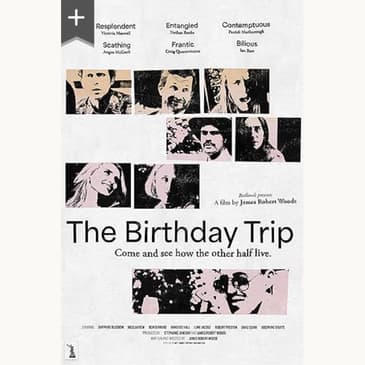
[00:04:19] How did it come to be? How did it get put together? And what are you doing with it? Great question. So the film is called The Birthday Trip. In the shortest possible terms, it's a story of three bougie couples who go to the Southern Highlands for a farmstay weekend. And chaos ensues. There's sort of relationship dynamics. There's class and race dynamics that sort of bubble to the surface. It's also a bit of a romp. Like it's fun and funny and satirical. We're kind of calling it a bit of an Aussie white lotus.
[00:04:49] Like it's got that kind of flavour. So that's kind of the film, The Birthday Trip. But as far as how it came together, I guess... So we'd made a bunch of short films, music videos over 10 years, Steph and I. And we got to the point where we were like, we need to do long form now. Because short films are great and rewarding. But I guess the amount of work you put in doesn't always equal what you get out of it. So we were like, well, we need to try our hand at a long form story, a feature film.
[00:05:19] So that was kind of... We just, I guess, were at the point where we felt ready to do that. And yeah, so pulled together a script. So we produced it ourselves, which meant we wrote something that was pragmatically achievable. Like it's a sort of talky character-based drama in a single location or single-ish location. And it's shot in a kind of slightly innovative way with like prosumer cameras. And it's a bit frenetic and it's got handheld energy.
[00:05:46] So yeah, we felt ready to make a feature. And we did it in a way that was, I guess, achievable to us. And as far as getting it out in the world, it's been a long road. But as of July 30, we released nationally in cinemas after a long sort of run up with different word of mouth screenings. And people are really, really resonating with it. We've had some incredible reviews and many sold out screenings.
[00:06:13] And yeah, now United in Avalon is coming on board. Yeah, we've got it. We've got it coming up in Avalon. Tell us about that. Well, it opens on Thursday, September 3rd for at least a week. So we approached United, I guess, after our main national run was finished. And we had all this press and reviews and whatever. So we approached them and said, hey, are you interested in taking on the film?
[00:06:39] Because I think something we found throughout the process is, you know, we're kind of when, you know, we're nobodies. We're not Tom Cruise or whatever. So when we call up a cinema and say, hey, do you want to play our film? They're like, never call me again. So we struggled to sort of get our foots in some doors. But then once we had some good reviews, we went back to United and said, hello, what do you think? How about it? We've shown that we can, you know, that the film can work. Are you interested?
[00:07:07] And yeah, they've taken us on and given us a week. Is that right? Is that how it all came together? I've heard a different story from our distribution manager. Oh. Oh. She contacted them in February. Right. And they said, we'll see how it performs once it opens in the metro areas. And they were really lovely. And, you know, sure enough, it performed really well. And they came back to us a couple of weeks ago. That's great. Well, at least they came back to you. That's the important thing. Our local cinema should be concentrating a lot on.
[00:07:36] I know there's surfing movies and all sorts of movies out there that need to be, Northern Beaches are doing. And that's something that Northern Beaches Entertainment is getting involved in now too. So, Steph, tell us how the story came about. James and I are married. And to that end, we've been to... Plot twist. To many, many social events together. I can't take credit for the story.
[00:07:59] But I do know that a couple of dynamics observed at dinner parties kind of made their way into James's brain with confusion or confoundment or obsession about how these people are together, why they're together. There's something dysfunctional going on here. I'll let you speak to your story more than I am. But I believe it came from these kind of observations out in the world. Yeah, no, totally. It came from a real place initially.
[00:08:28] Because, yeah, there's a lot of fun social dynamics at play in the film. Or some not so fun. Some are dysfunctional. Some are a little bit toxic. And, yeah, it did come from a place of, like, observing these things in the real world. Or being at a dinner party where there's that couple who are just giving off an awkward energy and making everyone feel tense. And wanting to sort of capture that dysfunction, I suppose. But in a satirical way.
[00:08:51] So, it's like, while it's a drama with these, you know, things going on, it's also got many comedic elements that kind of toes that line. Is the fascination for you... I've never asked James this question before. But I'm just wondering with a bit more distance from the film. Is the fascination for you, like, I'm seeing this. I don't want this to become me. I therefore need to deconstruct it and understand it such that I can be more functional?
[00:09:20] Maybe, yeah. Like, it's a coping mechanism, maybe. Yeah. I mean, it's... Heard it here first. I guess it's like feeling something strongly. So, if I'm feeling uncomfortable at the dinner party, then I hold on to that feeling. As opposed to, like, I don't know. If the dinner party was great and fun, then I'd just be like, oh, that was fun.
[00:09:42] I think the outworkings of this kind of story, world, dynamics James have captured is that once you see the film, it's not a comfortable watch. It's very funny. It's also a bit like, oh, like... I got that from the trailer, actually. I sort of looked at it and went, okay, what's going on there? It got my curiosity going. It did. It did. I think it just went from a whole different vibe. And then just, like, at the end, I was like, oh.
[00:10:12] But I just had a quick question about the creative process and if you took any creative risks or... I do remember there was a demolished scene. Yeah. Just, like, if you took any risks and if they paid off and they're still in the movie. Really good question. I mean, the demolition you mentioned was a big risk. So, there's kind of a climax or the climax of the film is this big stunt where a bulldozer drives clean through a house.
[00:10:41] Not giving anything away. Well, it's a little bit of a spoiler. It is in the trailer. So, I'm like, oh, yeah. But... You know what you're in for. Well, true. It's not necessarily the climax of, like, the emotional arc so much. But it's a big loud thing at the end. But that was a big risk, like, logistically because we didn't know exactly what would happen. Like, we had structural consultants and engineers and they all said different things. So, we were just like, okay.
[00:11:07] And two weeks before we filmed, we filmed in a single two-week block. But two weeks prior to that, we learned that the house that was to be demolished anyway had asbestos. So, we actually had to get a team in to safely remove everything. And then we had to rebuild with false wars the house. So... Wow. There were major risks involved. Yeah.
[00:11:32] Like, we didn't know if we'd have a house to demolish by the time we got to shooting that. And then in shooting it, we had... Well, we weren't sure what would happen. So, we just... We had ten GoPros in the house. We had three, four cameras outside, a drone. And we just had one take, basically. So, it was like, okay, let's see what happens. That is miraculous. Yeah. It was. It was. Skip for the biscuit. Totally. Yeah. James also filmed this film.
[00:12:01] And there's this shot. James is, like, filming the exterior of the house as the bulldozers coming through it. And again, we're not certain which way it falls, where the roof goes. And I swear to God, you're, like, a meter away from the, like, facade of the house, just falling, tumbling. Oh, my gosh. Yeah. I mean, yeah. You get into, like... Yeah. I was in a bit of... On autopilot, I guess. I was like, well, I just need to shoot it. So, I was like, okay. Like, again, we didn't know how it would fall.
[00:12:31] So, as it's falling, I was like, okay, cool. I need to get that in frame. And then I guess I'll track around this way. And then pan here. But, yeah, that was a big risk. Another risk, maybe, is the handheld camera style, which I love. And many audience members love. But also, there's a subset of audience members who just hate it. Vehemently hate it.
[00:12:55] So, that was a risk, shooting with less professional cameras in a sort of, yeah, frenetic, handheld way, which I think gives the film, like, a snappy rhythm and makes it much more fun and watchable. And, yeah, I mean, I love it. It's kind of like someone described it to me as an episode of Maths if it was scripted by Joachim Trier, which I was like, that's perfect. That's amazing. But, yeah, that was definitely a risk because not everyone is on board with that kind of approach.
[00:13:25] Yeah. But I feel like it, like, made it more intimate in a way because it's more in, like, a documentary sort of style as well. Yeah, yeah, 100%. It's like the camera's, like, catching up with the action. And it was, like, on the day. So, it all feels incredibly real. And, yeah, it has that doco flavour. And, yeah, that was, I mean, while it's all or mostly scripted, the camera does respond in a very organic way.
[00:13:52] It was amazing watching James kind of follow this invisible thread of energy. We did storyboard it prior to filming, but there was a lot of freedom when we were in each scene. And, yeah, James finding the, like, I guess, yeah, the energy in each of the actors. And also, I think the way that James filmed it allowed the actors to, you know, they weren't trying to hit, like, a small mark to find their light or whatever. They had freedom to form and move because James kind of moved with them.
[00:14:21] It was, I think it was quite beautiful, even though apparently some people get a bit nauseated in the cinema. Some. Some people. We made sick bags for them, actually. Oh, very nice. All right. Tell us a little bit about the actors in it. And tell us about Annalise, because obviously the Northern Beaches people are going, hey, Northern Beaches. We need to know more about it. Yeah. So, it's an incredible ensemble cast. The cast are some well-known actors, some emerging actors.
[00:14:50] Luke Jacobs is probably the most famous, who you'd know from Home and Away or Packed to the Rafters or X Factor. Sydney Weekender, I think. Yeah. Most recently. So, he kind of plays, like, an incredible performance in his first feature film role. But, yeah, as far as Northern Beaches, well, I guess Home and Away has a connection. But Annalise Hall is a local. So, she's a manly local. And Annalise Hall is an incredible, incredible actor.
[00:15:18] She plays the role of Isabel McDonald in the film, who's a bit of a social freight train. And she's an ABC development coordinator. And she's one of the three women whose birthday it is on this birthday trip. Annalise came to this role and really brought, like, it's her first feature film role. And she brought incredible drive and agency to it. So, in the film, she has a partner, Mark. And they have a little bit of maybe a toxic dynamic.
[00:15:46] Like, there's a bit of a power imbalance or, like, an uncomfortable power gradient they've got going on. He's, like, a weapons dealer. And on the page, a little bit uncomfortable. But the way that she brought that character to life, really, really incredible. And it kind of changes their relationship into equal partners in crime, I suppose. As opposed to it being, like, reading as toxic or something. And that's all the strength of her performance. But really, really incredible actor. So... And she's so funny, too. Yeah.
[00:16:16] Like, her performance, it's not comedic, but it's very funny. Yeah, absolutely. But no, so, Northern Beaches folks might know her from... She was the lead in Grease, the production that toured the country last year. Mamma Mia. She's done a lot of musical theatre stuff, but also, like, commercial TV stuff. But yeah, she's also a little younger than... So it's her 30th birthday in the film. The birthday trip. 30th birthday. But Annalise is an actor.
[00:16:45] Oh, so the three women are all 30. But Annalise is quite a bit younger and less experienced as an actor than some of these other cast who were all, like, pretty established. And you wouldn't know it. Like, she absolutely brought incredible, like, fire to that performance. But yeah. So, Annalise Hall. Northern Beaches local on a Northern Beaches screen. But yeah, the cast more broadly. Luke Jacobs. David Quirk, who you might know from Rosehaven or Please Like Me.
[00:17:14] Ben Gerard from Wolf Creek 2. American Psych of the Musical. There's some, like, really, really incredible performances. And yeah, some faces that you would probably recognise. I did as soon as I saw the trailer. There you go. There you go. Which, as I said, tweaked my interest. It was like, whoa. We're going local. Got to check this one out. Was there any financing or any problems with it? Because I know you guys filmed in... Was it up in the Highlands, is it? Yeah. Yeah, you filmed there.
[00:17:43] But, like, with the House and so on, was there any sort of financial things that you had to really think about? Well, the way we did it. So, we used the producer offset, which is a government tax rebate. Yeah. So, they give you 40% of your budget if you make an Australian film. But you get it at the end. So, we kind of structured our production around having that rebate. But, yeah, as far as actually making the film, we self-financed it. But we structured it in a way that, again, made it achievable.
[00:18:11] So, shooting on non-traditional cameras, shooting for 15 days in a concentrated location with a small cast. You know, Tom Cruise wasn't given an offer. I guess we made the thing that we knew we could achieve. But, yeah, like, the script was written. Again, it came from a real place and it's got authenticity in it and all that. But it was also written knowing that, like, we couldn't make Mission Impossible 12. Yeah, right. But we could make a talkie drama.
[00:18:41] So, yeah. I guess we self-financed it but structured it such that it was, like, quite cheap as feature films go. Wow. Not, you know, not cheap but cheap for a feature film. And then, yeah, the offset as well which we'll get at the end of this lap. Yeah, wow. That's very interesting. And since you mentioned the script, I'm just wondering what was the creative process from going from, obviously, writing your script and then actually getting it into, like, production and making it.
[00:19:09] Was there anything that kind of, like, changed or, like, the dynamic of it kind of switched up when you started filming, you added something in? Not that much, really. It really stuck to the script. Yeah. Yeah, it's pretty close to what was written. I mean, maybe back to your previous question, the demolition sequence. In the original script, wasn't a whole demolition. Oh, right. Because we knew that this house on one of our locations was being knocked down. But in the original script, we just had a tractor driving into it, like, kind of into the front door.
[00:19:39] And it was like, I don't know, it probably wouldn't have been that good of a climax, really. But I was like, well, that's what we can do. But then we found out, no, they're fully knocking this house down. So, in that case, on a financial front, that was actually not that expensive at all. We just had to, like, dress it and hire a bulldozer. But it's way cheaper than it actually looks on screen. I thought that was, like, very expensive. Yeah, it looks it.
[00:20:07] But, yeah, for us, as far as, like, pulling it together tangibly, it wasn't. I think, interestingly, and maybe kind of uniquely, the script, apart from these kind of tweaks, stayed. It's all on screen. I think there's one scene we cut, which was a very short scene. But it stayed in sequence. Nothing's kind of departed from the original vision, which I think is a testament to James's singular vision of the story.
[00:20:34] You obviously knew from the beginning exactly what you wanted and were able to put that on the page, direct that, and then work with it in the edit as well. I think that's unusual. That's a talent. Yeah. That is a real talent. Yeah, absolutely. At no point were we trying to find the story later or, oh, we've just realised this doesn't work. Like, from the beginning to the end, it stayed true.
[00:21:02] That's the problem with a lot of the films at the moment. There's no story. There's no story. You know, it's a lot of Crash Band Crunch, but there's no story. Yeah. And we're really suffering from not having films with stories in them because that is entertainment. Totally. And that we make films and we made this film because we saw a lot of stuff on Australian screens that didn't totally resonate with us or that, like, aesthetically or tonally just felt a little bit different to what we like.
[00:21:32] The focus seems to be on what it looks like or the... The action film side of it. I mean, even the action films don't have a story. Yeah. And it needs a story to make the film. Otherwise, it's just a lot of Crash Band Crunch. And, yeah, okay, that was fine, but... It's like, what did Einstein say? Necessity is the mother of invention. If you start with a story, then you can solve how you do it. Film it on a cheap camera. Film it in a single location.
[00:22:00] But if you're starting with money and you want to do a stunt first, you're kind of starting from the wrong place. And I think that's where we are in the cinema landscape. People just want to use all the fancy tech they have and see what they can do. Yeah. And people do, to your point, Christine, like, people really do... It takes about 15 minutes, but people really resonate with these characters. Because there's Annalise Hall, who plays the ABC development coordinator. There's a weapons company, Air Finance Bro.
[00:22:27] There's a jingle writer, disaffected, arty jingle writer. Oh, that's cool. There's a painter. So, and they're all quite idiosyncratic. And that's what we found people are latching on to the story and these relationships. Yeah. Yeah. So, there is a little bit of Crash Band Crunch at the end, but it's all... Well, you've got to have a little bit of Crash Band Crunch. I'm not complaining about the Crash Band Crunch. It's just that nothing has a story. Yeah. And that's what people are starving for right now. I think so. Yeah. Yeah. Yeah.
[00:22:56] So, both of you worked on the film together while filming. Did you add any creative input? Oh, absolutely. I was there from day one of the script. Yeah. A lot all the way. A lot all the way. Yeah. Yeah. Yeah. I don't know. I can't speak to anything specific. I wrote the Brad Minton joke, I'm pretty sure. But, you know, we've been working together on it from day one. So, maybe there's a distorted collective memory going on. Yeah. Well, I think if I can answer on your behalf about what you did. You were there from day one.
[00:23:25] So, you'd read the first draft and you'd say, cool, it's good, but what about this? Or, I'm not connecting with this character. Why? So, that feedback throughout, like, really shapes the end product. Yeah. Or you'll be like, well, where are we going to shoot this? Or how do we shoot this? Whether it's story stuff or logistical stuff. So, that was kind of constant throughout pre-production. And then casting, you had a lot, well, I guess we cast it together, you had loads of input there. And the paintings. Music. Yeah. Yeah.
[00:23:55] A lot. Just a lot. So, you didn't have a small part. You had quite a large part. You had a large part. You're being very modest. Oh, yeah. I suppose so. That's what I thought. That's what I thought. Producer is an umbrella term, I suppose. Umbrella term for I do everything. Do you have, like, a favourite scene or anything? Oh, that's such a good question. Favourite scene? Any moment in the film that you think that will really resonate with the audience?
[00:24:24] We've done so many interviews and Q&As. No one's asked that. Yeah. That's such a good question. The first one that comes to mind is there's a scene in which, so, one of the characters shoots a cow. And it's kind of an, like, uncomfortable moment, I suppose. But then there's, like, a dinner scene in which the jingle writer, the disaffected jingle writer, writes a song about this cow being shot and kind of reframes it in an, like, absurd, ironic, fun way.
[00:24:51] And they all join in and they're all singing and they're all a bit drunk and, like, the camera's very frenetic. And it's just a really good vibe of the scene. Like, it feels very real. They're singing this song. Yeah, that's the first scene that comes to mind, I suppose. I should have said the cake scene. There's a... That's what you were going to say? Yeah, that's what I was going to say. Yeah, that's a better answer. That's a better answer. There's a scene at a winery, which is... We were so lucky the day we filmed it. It was, like, a beautiful spring day, clear sky.
[00:25:20] They're sitting at a table in a vineyard. It's the birthday cake scene. But the reason it's my favourite scene is one of the characters who's a bit of a comedic foil, a bit of a, like, can laugh at himself, a bit of a buffoon. He holds his own... Oh, sorry, Lars, played by Luke Jacobs. He holds his own and has this very serious kind of back and forth with David Quirk. And the shift in his performance is just... It's... Every time I watch it, I marvel at his control as an actor, Luke Jacobs.
[00:25:50] It's amazing. And that's my favourite scene. Oh, wow. Yeah. That's so interesting. That's all the questions I got. Thank you, Gisha. That was great. That was a great question. Thank you. Yeah. Very thought-provoking. All right. Well, we're about to wrap it up. So, we are looking forward to seeing this film. As I said, I've only seen the short, so looking forward to seeing it. It's wonderful that we're getting more and more films. Don't stop. Keep it up. We want to see more films happening.
[00:26:16] And especially with our locals, the Sydneysiders, we want to see more filmmakers out there. As I said, we've got some filmmakers on the Northern Beaches doing surf movies and so forth at the moment. But we need more. And we encourage you enormously to come up with new films for us. So, thank you so much, James and Stephanie and Gisha, for coming in and talking to us today. Thank you. Thank you so much. It's so lovely to have a chat. Thank you. United Cinemas have a long just doing the plug. Come and see it. Thank you. Don't forget to follow, like and share. Stay safe.
[00:26:46] And I'll catch you next time. Thank you.